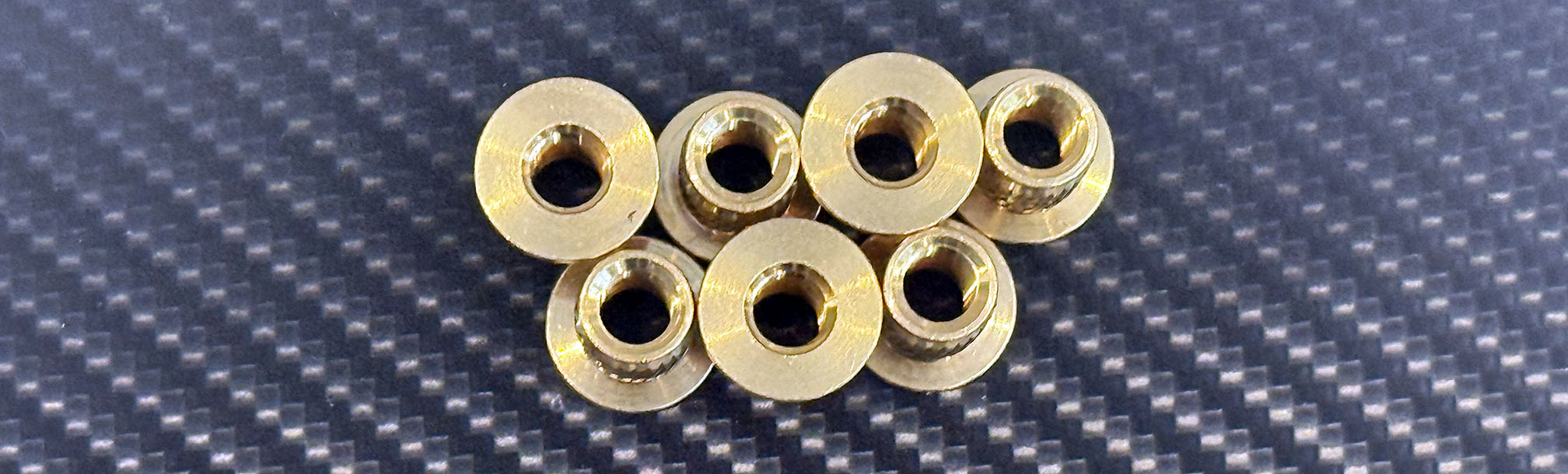
Carbon fiber reinforced polymers (CFRP) have transformed aerospace, automotive, and high-performance applications by delivering exceptional strength-to-weight ratios and fatigue resistance. But how do you create reliable threaded connections in a material that’s fundamentally different from the metals we’ve been fastening for over a century? Threaded inserts. However, their performance in
automotive components
Reducing Assembly Failures in Automotive Prototyping: Co-Design Strategies for Plastics and Fastener Engineers
As car designers accelerate the integration of lightweight materials into vehicle designs, collaboration between plastics and fastener engineers has become an imperative. Nowhere is this more evident than during the prototyping and pre-production stages, where fastener choices can significantly influence part performance, manufacturability, and long-term durability. When fastener integration is
Comparative Analysis of Zinc vs. Phosphate Coatings: What’s the Best Coating for Industrial Applications
Selecting the coating of a fastener is one of the first and most important decisions that an engineer must make. When making this decision, engineers must consider a myriad of important decisions. These decisions include: environmental conditions, corrosion resistance, temperature resistance, electrical conductivity, durability, and of course, cost of the
How do threaded inserts help automakers meet CAFE standards?
How custom components can help enhance durability in automotive assemblies while helping achieve bigger goals like emission standards for automakers In 2024, the CAFE standards for passenger cars stand at 54.5 MPG and are set to increase at 2% year over year for model year 2027 through 2031. Those kinds
What types of threaded inserts are used in cars?
As a direct supplier to automotive OEMs, CFI and its engineers have a lot of experience with automotive components. While many components have a variety of uses, threaded inserts, in particular, are widely utilized throughout the average car. In this blog, we’ll cover the most common types of inserts and
What are threaded inserts used for in the automotive industry?
Threaded inserts are utilized to strengthen and add threads to all kinds of materials, from plastics, to composites, to woods. But, how are they utilized in the automotive sector? Inserts have found their way into cars, trucks and SUVs for a wide range of uses, from interior components, to the
As Aluminum Usage Soars, So Does the Need for Reliable Threaded Inserts
Exploring the Rising Need for Threaded Inserts Amid the Increasing Adoption of Aluminum in Modern Manufacturing In 2019, according to the International Aluminum Institute, the automotive industry made up 18% of the world’s total aluminum consumption annually. That number is expected to more than double to as much as 335
Innovation in Threaded Inserts for Automotive Plastics and Composites
In a world filled with next-generation materials, is there still room for the threaded insert? Even in non-electrified vehicles, weight has grown as safety protocols demand more safety systems. According to NADA, the average weight of a new vehicle sold in the US in 2022 was 4,329 pounds – 1,000
Reducing NVH in Automotive Assemblies: The Role of Plastics-Fastener Collaboration
Noise, Vibration and Harshness (NVH) has long been a critical metric for buyers when deciding the overall quality of a vehicle. That’s why we, as fastener and plastics engineers, have to begin thinking about NVH quite literally at the nuts and bolts level. Whether you’re talking about EVs or traditional
What Inserts Are Used in Plastic Battery Housings and EV Components?
The shift to electric vehicles has quietly become one of the more demanding proving grounds for fastener and insert technology. EV platforms impose requirements that don’t often coexist in conventional automotive design: lightweight plastic housings that must meet structural load requirements, thermal cycling ranges far exceeding traditional underhood environments, vibration