
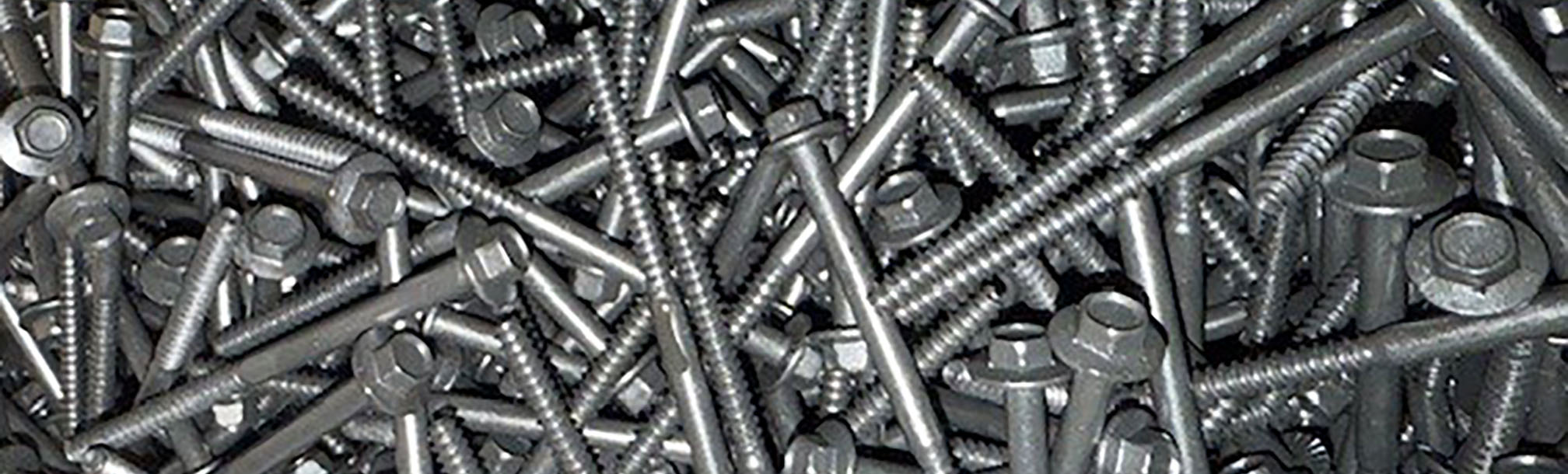
A structured pre-design checklist for engineers who need to get the specification right the first time.
Custom screws can solve problems that off-the-shelf fasteners cannot, but only if the design specification is grounded in the right engineering decisions from the start. Specifying a custom fastener without working through the fundamentals is a reliable path to costly revisions, field failures, or manufacturing delays.
The NASA Fastener Design Manual makes the point plainly: “To the casual observer the selection of bolts, nuts, and rivets for a design should be a simple task. In reality it is a difficult task, requiring careful consideration of temperature, corrosion, vibration, fatigue, initial preload, and many other factors,” (Barret, 1990, p. 1). That observation applies with even more force when you’re specifying a fastener from scratch.
What follows is a structured set of questions every engineer should be able to answer before committing to a custom screw design.
1. What Loads Will the Fastener Actually See?
This is the foundational question, and can go underspecified. A bolted joint experiences multiple load types simultaneously, and your custom screw must be designed to handle the combination, not just the dominant one.
The key load scenarios to characterize are:
Tensile (axial) loading – Is the fastener resisting pullout? What is the sustained load, and is there a dynamic component? Fatigue under cyclic tension is a leading cause of fastener failure and requires more conservative design margins than static loading alone.
Shear loading – Is the fastener subject to lateral forces? Shear loads require careful attention to shank diameter, thread engagement depth, and the material interface through which the fastener passes.
Combined loading – Many real-world joints see both shear and tension simultaneously. The NASA Fastener Design Manual explicitly covers how to combine simultaneous shear and tension loads in joint analysis, (Barret, 1990, p. 90-93) and engineers should not assume a fastener sized for one load type is adequate for a combined state.
Preload and clamp load – The clamp load generated during installation is what keeps a joint from loosening under service. Automotive industry practice, as noted in engineering design references, is to perform torque-angle testing on every new joint type to ensure installation torque produces the required clamp load without exceeding yield strength. For a custom screw, specifying the target torque and verifying the relationship between torque and developed clamp load through testing is not optional – it is the process.
2. What Material Is the Fastener Threading Into?
The substrate material is one of the most critical design inputs, and it has cascading effects on thread geometry, engagement length, and drive torque.
The reason thread engagement requirements vary significantly by material is well understood: an M10 bolt requires roughly 10mm of engagement in steel, but approximately 20mm in aluminum – because softer substrates have lower shear strength and the threads fail at lower loads. Many assembly failures attributed to “weak fasteners” are actually the result of inadequate thread depth in softer materials.
For thermoplastic substrates, the analysis is more complex still. Screw boss design guidelines for injection-molded parts specify that boss wall thickness should be approximately 60 percent of nominal wall thickness, and that thread form selection – particularly whether to use a thread-forming (self-tapping) or thread-cutting design – significantly affects withdrawal strength and long-term retention under thermal cycling.
The custom screw designer needs to answer: What is the substrate? What is its hardness? Is it a metal, polymer, or composite? Is the engagement into a tapped hole, a molded boss, or a thread insert? The thread geometry, including pitch, flank angle, and root radius, should be selected to match.
3. What Are the Environmental Conditions?
Environment dictates material selection, coating, and plating in ways that are easy to underestimate at the design stage.
Corrosion – Galvanic corrosion is a persistent source of fastener failure when dissimilar metals are in contact. When the fastener material and the substrate or adjacent structure are far apart on the galvanic series, the less noble material acts as an anode and corrodes preferentially. In structural applications where fasteners are the anode, this can produce rapid and severe degradation.
Hydrogen embrittlement – This is among the most insidious failure modes in high-strength fasteners. The mechanism is well documented: hydrogen atoms introduced during electroplating penetrate the crystalline structure of the steel, causing delayed fracture under load. High-strength Grade 12.9 metric and Grade 8 imperial fasteners are particularly susceptible during electroplating. The failure is not immediate – hydrogen-embrittled fasteners can pass installation torque and fail hours or days later with no visible warning signs.
The industry-standard detection procedure is ISO 15330:1999, and preventive measures include: specifying post-plating bake cycles to drive out absorbed hydrogen; selecting low-hydrogen-generating finish processes such as mechanically applied zinc, thermal diffusion zinc coatings, or zinc-flake coatings; and avoiding electroplated finishes entirely on fasteners above HRC 39 (390 HV) in critical applications.
Temperature – Operating temperature affects both material strength and coating stability. Electrolytic platings have decomposition temperatures beyond which they regenerate free hydrogen and lose corrosion protection simultaneously. Know the operating temperature range before specifying a finish.
4. What Head Geometry, Drive Type, and Installation Process Do You Need?
This question bridges the mechanical design to the manufacturing and assembly context. This is an area often underweighted relative to purely structural considerations.
Head profile – The head geometry affects countersink angle, clearance from adjacent features, cosmetic surface interface, and driver access. If you find yourself designing your housing geometry around an available head style, that is a signal to revisit whether a custom head profile is warranted.
Drive type – Standard drive recesses (Phillips, Torx, hex socket) are optimized for general use. For automated assembly, the drive geometry affects feed reliability, cam-out resistance under production torque, and tool life. For tamper resistance, a proprietary drive geometry is far more effective than any standard security drive type, and has the additional benefit that unauthorized service tools won’t exist. The choice of drive type should be made in the context of the production environment and end-use requirements.
Assembly volume and method – High-volume automated assembly places very different demands on fastener geometry than low-volume manual assembly. Features like an extended drive recess can dramatically improve auto-feed reliability. Reducing the variety of fasteners in a product – fewer sizes, fewer head styles, fewer drive types – also pays dividends in inventory management, tooling costs, and assembly line error rates.
5. What Tolerances Are Actually Required?
Over-specified tolerances are one of the most common and most costly mistakes in custom fastener design. Tighter tolerances increase manufacturing complexity, extend lead times, and raise production costs. Tolerances should only be specified when function genuinely requires them.
Thread tolerance classes are standardized and carry specific functional implications. Class 2A/2B thread tolerances – the most common commercial and industrial fit – balance performance, manufacturing economy, and convenience. As documented in the NASA Fastener Design Manual and related engineering references, Class 2A/2B is the standard fit for the vast majority of commercial and industrial fasteners. Class 3A/3B fits are tighter and appropriate for precision applications; Class 1A/1B are loose fits suited for quick assembly with minimal precision requirements (Barret, 1990, p. 14).
For diameter and length tolerances on the fastener body, the principle is straightforward: specify the tolerance band to the precision that function requires, not to the precision that seems impressive. Microscopically small improvements in tolerance require specialized equipment, climate-controlled environments, and much longer cycle times – costs that are only justified when the application demands it.
The discipline is to identify which dimensions are functionally critical (thread engagement, shank diameter at a bearing surface, grip length in a shoulder screw used as a pivot) and specify tight tolerances on those, while allowing standard tolerances everywhere else.
6. What Is the Volume, Lead Time, and Cost Structure?
Engineering decisions don’t happen outside of program constraints, and custom fasteners have supply chain characteristics that differ meaningfully from standard ones.
The “in-place cost” model is the correct framework: purchase price alone does not capture the real cost of a fastener. The true cost is the in-place cost – unit price plus preparation cost (drilling, tapping, secondary operations) plus installation cost plus the cost of down-time and replacement if the fastener fails in service or on the assembly line. The in-place cost of a fastener can be 5 to 20 times its purchase price. That multiplier is the argument for getting the specification right, not for specifying the cheapest available option.
For custom screws specifically:
Tooling and setup costs – Custom forming tooling involves real upfront investment. This cost amortizes favorably at production volume, but should be evaluated against the program’s volume forecast.
Lead time – Custom fasteners have longer lead times than catalog items and fewer alternative suppliers. Supply chain risk should be assessed explicitly, particularly for programs with hard delivery schedules or single-source dependencies.
Prototype process – Some manufacturers offer machined or turned prototypes as a rapid pre-production qualification step, which closely approximate the mechanical characteristics of production-formed parts. This approach eliminates the need to commission forming tooling before the design is validated, and can compress the design iteration cycle significantly.
Volume thresholds – The unit economics of custom fasteners change substantially with volume. For low-volume or prototype builds, the overhead of a custom spec may not be justified; for high-volume production, it frequently is.
7. Are There Applicable Standards or Regulatory Requirements?
Custom does not mean unregulated. Depending on the application, the fastener may need to comply with published standards that constrain the design space before you begin.
Relevant standards families include:
ASTM, ANSI, DIN, ISO standards are one of the two fundamental requirements of any threaded connection design. Custom designs should trace their geometry to recognized standards wherever possible, deviating only where functional requirements genuinely demand it.
Aerospace (UNJ threads, NAS, MS specs) – UNJ threads, now the standard for aerospace fasteners, feature enlarged root radii that improve fatigue performance versus standard UN threads. Aerospace applications almost always require documented heat treatment and plating procedures from qualified sources.
Industry-specific certifications – Some sectors require third-party certification of fastener lots (e.g., RoHS compliance for electronics, DFAR for defense procurement). These requirements should be captured as design inputs before the specification is written.
The Pre-Design Checklist
Before finalizing a custom screw specification, an engineer should be able to answer all of the following questions:
- What are the tensile, shear, and combined loads on the joint, including dynamic and fatigue components?
- What is the substrate material, hardness, and thread engagement geometry?
- What is the service environment – temperature, corrosion exposure, galvanic risk, regulatory classification?
- What head profile, drive type, and installation process does the assembly require?
- Which dimensions are functionally critical and require tight tolerances, and which do not?
- What are the production volume, lead time requirements, and in-place cost budget?
- What standards, certifications, or regulatory requirements apply?
If any of these questions can’t be answered at the design stage, that’s a gap to close before geometry is committed and not after tooling is cut.
A Final Note on Front-End Investment
The cost of getting a custom fastener specification wrong is not measured at the time of initial design. It’s measured in field returns, assembly rework, redesign cycles, and in the worst cases, safety incidents. The engineering effort required to answer the questions above thoroughly is modest relative to those costs. Reviewing assembly requirements, validating thread engagement calculations, and performing torque-clamp testing before committing to production tooling are standard practices in well-run product development programs because they prevent problems that are far more expensive to fix later.
Where does CFI fit in?
At CFI, we offer a wide range of high-performance custom screws and fasteners designed for all applications. Contact our team at 847-918-0333 or sales@componentsforindustry.com to learn how we can support your next engineering project.
Sources
Barrett, Richard T. NASA Fastener Design Manual (Reference Publication 1228), 1990. Obtained from: https://ntrs.nasa.gov/citations/19900009424
