
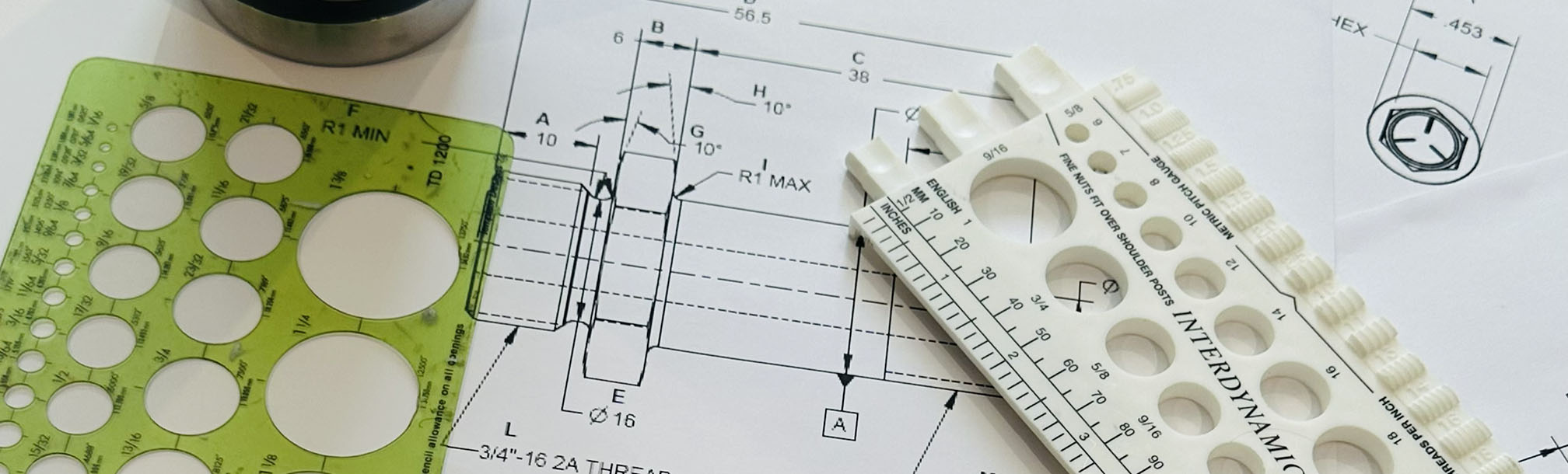
When specifying fasteners for engineering projects, understanding the differences between ASTM, ISO, SAE, and JIS standards is critical. These four organizations govern the majority of fastener specifications used worldwide, but each has distinct origins, measurement systems, applications, and grading methods. Here’s what engineers need to know to navigate these standards confidently.
The Four Major Standards Systems
ASTM (American Society for Testing and Materials)
Focus: Material properties and testing requirements
Origin: United States
Measurement: Imperial (inches)
Primary Application: Construction, industrial, high-pressure/high-temperature service
ASTM provides authoritative requirements for mechanical properties including tensile strength, hardness, heat-treatment processes, and material chemistry. Well-known specifications include ASTM A307 for low-strength bolts, A325 and A490 for structural bolts (now replaced by F3125), and A193/A194 for alloy and stainless steel bolting used in high-temperature or corrosive environments.
ISO (International Organization for Standardization)
Focus: Global standardization across materials, dimensions, and properties
Origin: International (based in Geneva, Switzerland)
Measurement: Metric (millimeters)
Primary Application: Worldwide manufacturing, automotive, machinery
ISO standards define property classes for metric fasteners through ISO 898-1 1 (externally threaded) and related specifications. The system uses property class designations like 4.6, 5.8, 8.8, 10.9, and 12.9, where the numbers directly indicate strength characteristics.
SAE (Society of Automotive Engineers)
Focus: Mechanical and material requirements for automotive applications
Origin: United States
Measurement: Imperial (inches)
Primary Application: Automotive, machinery, equipment, OEM applications
SAE J429 covers mechanical and material requirements for inch-series steel bolts, screws, studs, and U-bolts. Grades include 1, 2, 5, 5.1, 5.2, 8, 8.1, and 8.2, with increasing numbers representing increasing tensile strength. The standard applies to fasteners up to 1.5 inches in diameter.
JIS (Japanese Industrial Standards)
Focus: Japanese manufacturing standards harmonized with ISO
Origin: Japan
Measurement: Metric (millimeters)
Primary Application: Japanese automotive, electronics, machinery
JIS standards historically followed unique Japanese specifications but have been progressively harmonized with ISO since joining in 1952. Modern JIS fasteners typically follow ISO property classes (8.8, 10.9, 12.9) while maintaining specific dimensional and marking requirements for Japanese manufacturing.
How Property Classes and Grades Work
ISO Property Class System (Metric)
ISO uses a two-number system separated by a decimal point (e.g., 8.8, 10.9, 12.9):
First number: Tensile strength in hundreds of MPa
Second number: Ratio of yield strength to tensile strength × 10
Example: Property Class 8.8
- Minimum tensile strength: 800 MPa (8 × 100)
- Yield strength ratio: 0.8 (8/10)
- Actual yield strength: 640 MPa (800 × 0.8)
Common ISO Property Classes:
- 4.6, 4.8, 5.8: Low to medium carbon steel, general applications
- 8.8: Medium carbon steel, quenched and tempered, minimum 800 MPa tensile (~116,000 psi)
- 10.9: Alloy steel, quenched and tempered, minimum 1040 MPa tensile (~150,000 psi)
- 12.9: Alloy steel, quenched and tempered, minimum 1220 MPa tensile (~177,000 psi)
SAE Grade System (Imperial)
SAE uses whole numbers and decimal variations to indicate strength levels2:
SAE Grade 1: Low carbon steel, no head markings, general purpose, ~60,000 psi tensile
SAE Grade 2: Low carbon steel, no head markings (or manufacturer mark), ~74,000 psi tensile for sizes 1/4″ to 3/4″
SAE Grade 5: Medium carbon steel, quenched and tempered, three radial lines on head at 12/4/8 o’clock positions, ~120,000 psi tensile
SAE Grade 8: Medium carbon alloy steel, quenched and tempered, six radial lines on head, ~150,000 psi tensile
ASTM Specifications (Imperial)
ASTM uses alphanumeric designations (letter + number) for different material types and applications:
ASTM A307: Carbon steel bolts and studs, 60,000 psi tensile strength, Grade A for general applications
ASTM F3125 (replaces A325/A490): Structural bolts
- Grade A325: Heat-treated steel, 120/105 ksi minimum tensile
- Grade A490: Heat-treated alloy steel, 150 ksi minimum tensile
ASTM A193/A194: Alloy and stainless steel for high-temperature or high-pressure service3
ASTM A354: Quenched and tempered alloy steel, Grades BC and BD4
JIS Standards (Metric)
JIS fasteners use strength class markings similar to ISO (4, 7, 8, 8.8, 9, 10, 10.9, 12.9) stamped on bolt heads. Since the 1967 ISO harmonization effort, JIS has adopted ISO property classes while maintaining specific dimensional requirements like wrench sizes (across flats) and thread pitches unique to Japanese specifications.
Head Markings: Visual Identification
ISO Metric Fasteners
- Property class stamped on head: “8.8”, “10.9”, “12.9”
- Numbers clearly visible on hex head
SAE Grade Fasteners
- Grade 2: No markings (or manufacturer mark only)
- Grade 5: Three radial lines at 12, 4, and 8 o’clock positions
- Grade 8: Six radial lines evenly spaced around head
ASTM Fasteners
- A325: Three heavy radial marks (structural bolts)
- A490: Letter “A490” or similar designation
- May include manufacturer identification
JIS Fasteners
- Strength grade number stamped on head (similar to ISO)
- May include hemispherical dimples or embossments on head or side to indicate modified specifications
- Manufacturer marks may vary
Approximate Grade Equivalents
While not exact substitutes, these grades have similar strength ranges:
| ISO Property Class | SAE Grade | ASTM Specification | Tensile Strength |
| 4.6, 4.8 | Grade 1, 2 | A307 | ~60-74 ksi |
| 5.8 | Grade 2 | A307 Grade B | ~74 ksi |
| 8.8 | Grade 5 | A449 (small sizes) | ~115-120 ksi |
| 10.9 | Grade 8 | A354 Grade BD, F3125 Gr A490* | ~150 ksi |
| 12.9 | (none exact) | A574 (socket caps only) | ~170-180 ksi |
Important: These are rough equivalents only. Direct substitution requires engineering approval because:
- Dimensional specifications may differ (head sizes, thread lengths)
- Chemical composition requirements vary
- Temperature performance differs
- Testing requirements are not identical
For example, ISO 898-1 Class 8.8 maintains the same mechanical requirements up to M80 (3.125″), while ASTM A449 lowers requirements as diameter increases, necessitating manufacturer consultation.
Key Differences in Application
When to Use ASTM
- Structural steel construction (buildings, bridges)
- Pressure vessels and piping systems
- High-temperature or high-pressure applications
- North American construction projects
- Specifications requiring material test reports (MTRs)
When to Use ISO
- International manufacturing and global supply chains
- Metric machinery and equipment
- European or Asian market products
- Automotive production (global platforms)
- Applications requiring worldwide interchangeability
When to Use SAE
- Automotive OEM applications (North America)
- Machinery and equipment manufacturing (US market)
- Agricultural equipment
- Heavy-duty vehicles
- Replacement parts for US-manufactured equipment
When to Use JIS
- Japanese automotive components (Toyota, Honda, Nissan, etc.)
- Japanese electronics and appliances
- Vintage Japanese motorcycles and equipment restoration
- Products manufactured for Japanese domestic market
- Applications requiring compatibility with existing Japanese machinery
Critical Considerations for Engineers
Measurement System Compatibility
Never mix imperial and metric fasteners. While some dimensions appear similar (M6 ≈ 1/4″), threads are NOT interchangeable:
- M10×1.5 nut will thread onto a 3/8-16 bolt, but this creates dangerous conditions
- Thread engagement, strength, and safety are all compromised
- Always verify both diameter AND thread pitch
Material Certificates and Testing
ASTM requirements: Often require material test reports (MTRs) with detailed chemistry and mechanical properties
ISO requirements: Certificate of compliance may suffice for many applications
SAE requirements: Typically less documentation than ASTM for general automotive use
JIS requirements: Compliance certificates similar to ISO
Temperature Performance
Different standards have different temperature considerations:
- ASTM A193/A194 specifically address high-temperature service
- ISO 898-1 properties are valid at ambient temperature (~20°C/68°F)
- SAE J429 properties are specified at ambient temperature
- Temperature-dependent applications require specific grade selection
Coating and Plating Restrictions
High-strength fasteners (SAE Grade 8, ISO 10.9/12.9, ASTM A490) require caution with coatings:
- Hot-dip galvanizing can cause hydrogen embrittlement
- ISO 898-1 and various ASTM specs provide coating guidelines
- Alternative coatings (zinc, Geomet, mechanical plating) may be required
Regional Availability
North America: ASTM and SAE dominate; ISO available but may have longer lead times
Europe: ISO standard; ASTM available for specific applications
Asia: ISO and JIS prevalent; SAE available for automotive applications
Global projects: ISO typically specified for broadest availability
Procurement Best Practices
Specify Clearly
Include complete specification in purchase orders:
- Standard organization (ASTM, ISO, SAE, JIS)
- Specific specification number (A307, 898-1, J429, B1180)
- Grade or property class (Grade 5, Class 8.8, etc.)
- Size, length, thread pitch
- Coating requirements
Verify Certifications
Request appropriate documentation:
- Material test reports (MTRs) for ASTM
- Certificates of compliance for ISO/SAE/JIS
- Third-party testing verification when critical
Understand Equivalents
When substituting between standards:
- Consult with fastener suppliers and manufacturers
- Obtain engineering approval for substitutions
- Verify dimensional compatibility (head size, thread length)
- Confirm mechanical properties meet or exceed requirements
Check Head Markings
Verify fasteners upon receipt:
- Head markings match specified grade/class
- Manufacturer identification present when required
- Markings are clear and legible
Conclusion
ASTM, ISO, SAE, and JIS standards each serve distinct purposes in the fastener industry. ASTM focuses on material properties and testing for industrial/construction applications. ISO provides globally recognized metric standards for international manufacturing. SAE addresses automotive and machinery needs in imperial sizing. JIS maintains Japanese-specific requirements while harmonizing with ISO for international compatibility.
Understanding these differences allows engineers to:
- Specify the correct standard for their application and market
- Avoid dangerous mixing of incompatible fastener systems
- Ensure proper documentation and compliance
- Select appropriate grades for strength and environmental requirements
- Navigate global supply chains effectively
When in doubt, consult with experienced fastener suppliers like CFI, reference the actual standards documents, and obtain engineering approval for any grade substitutions. The modest investment in proper specification prevents costly field failures, warranty claims, and safety incidents.
Need Help Specifying the Right Fasteners?
At Components for Industry, we specialize in fasteners and fastener Quality Control. We are ISO 9001 certified and offer a wide range of ASTM and JIS-compliant fasteners and fastening systems. Whether you’re designing a high-end consumer product or a critical automotive component, we can help you achieve the perfect balance between strength and aesthetics. If you want more information about CFI, our industrial components or our custom design process, contact us at 847-918-0333 or sales@componentsforindustry.com.
Sources
- ISO 898-1:2013. “Mechanical properties of fasteners made of carbon steel and alloy steel.” https://cdn.standards.iteh.ai/samples/60610/e211f7b6697643f192d041ceceb1f2be/ISO-898-1-2013.pdf ↩︎
- Society for Automotive Engineering. SAE J429: Mechanical and Quality Requirements for Externally Threaded Fasteners. CFR Section(S) 30 CFR 77.403-1(d)(2)(iii)(B). Obtained from: https://law.resource.org/pub/us/cfr/ibr/005/sae.j429.1971.pdf ↩︎
- ASTM International. “Standard Specification for Alloy-Steel and Stainless Steel Bolting for High Temperature or High Pressure Service and Other Special Purpose Applications.” https://store.astm.org/a0193_a0193m-23.html ↩︎
- ASTM International. “Standard Specification for Quenched and Tempered Alloy Steel Bolts, Studs, and Other Externally Threaded Fasteners.” https://store.astm.org/a0354-17r25.html ↩︎
